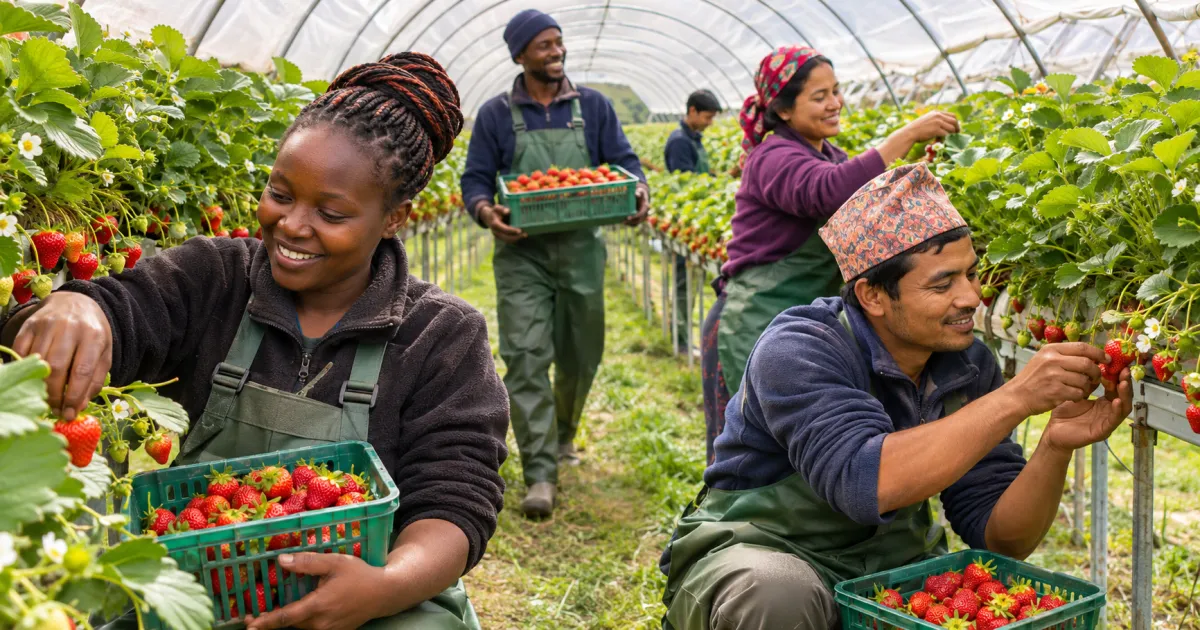
Farm work abroad pays close to the legal minimum in most countries, so the real differences come from hours, housing and how long you can stay. On official figures, Norway pays farm labourers the most per month, Canada pays around $19 to $23.50 an hour depending on province and job, and the United Kingdom pays slightly above its national minimum wage. Rural rent is lower than city rent everywhere, and many seasonal schemes include housing, which changes the comparison completely.
Canada: hourly pay by province
Job Bank's wage reports, updated in November 2026 for 2024 to 2025, show a median of $20.00 an hour for general farm workers in livestock work across Canada, rising to $23.50 in Alberta, with $20.00 in Ontario and British Columbia. For harvest hands the national median is $19.00, with $22.00 in Alberta and $18.00 in Ontario. At 40 hours a week, $20.00 an hour gives about $3,470 a month before tax, and the Alberta livestock median about $4,070.
Many farm workers come through seasonal programmes rather than permanent jobs. Alberta's licensing rules show how these workers are treated: people in the Seasonal Agricultural Worker Program are not counted as Alberta residents and cannot get a provincial driving licence, although they may drive on their home licence. Ask any employer in writing what housing, transport and deductions apply.
United Kingdom: just above minimum wage
The legal floor for adults, the National Living Wage, has been £12.71 an hour for anyone 21 or older since April 2026, and goes up to £13.21 in April 2027. The ONS earnings survey, table 14, gives provisional 2026 figures for full time farm workers of £13.99 an hour at the median and £30,725 a year, compared with £40,911 for all full time employees.
At the annual median, a farm worker pays about £3,630 in income tax and about £1,450 in employee National Insurance, which charges 8% on monthly pay between £1,048 and £4,189 under category A. That leaves roughly £2,140 a month.
Most overseas recruits come on the Seasonal Worker visa, which allows horticulture work such as picking fruit, vegetables or flowers for up to 6 months, or poultry work from 2 October to 31 December. The application fee is £340, and decisions usually take about 3 weeks. It does not lead to settlement, so treat it as a way to earn and save, not to move permanently.
Norway: highest monthly pay
Statistics Norway's earnings figures for 2025 give full time agricultural, forestry and fishery labourers a median of NOK 40,590 a month. Within that group, crop farm labourers had a median of NOK 30,850 and livestock farm labourers NOK 32,500, which shows how much the job type matters.
On NOK 40,590 a month, the 2026 bracket tax comes to roughly NOK 8,300 a year, and the 7.6% national insurance contribution on wages adds about NOK 37,000. A flat tax on general income is charged on top, so check the result in the official calculator. Farms are rural, and the rental market survey shows an average rent of NOK 6,570 a month for a one room home in small towns in 2025, against NOK 10,090 in Oslo and Bærum.
What really decides your savings
- Housing: free or cheap housing on the farm can be worth more than a higher hourly rate.
- Hours: harvest weeks can be long, but rain or a short season can cut hours sharply.
- Deductions: check what is taken for housing, transport and equipment, and that it is allowed.
- Length of stay: a six month visa limits total earnings, however good the hourly pay.
A quick comparison
- Norway: highest monthly median, but fewer openings for people from outside Europe.
- Alberta: strong hourly pay for livestock work and lower rural costs.
- Ontario and British Columbia: around $18 to $20 an hour, with many seasonal jobs.
- United Kingdom: about £13 to £14 an hour, with a clear seasonal visa route but no path to settle.
Whatever the country, recruitment through official schemes should never require you to pay large fees to a middleman. Ask the government agency that runs the scheme in your home country before you pay anyone.
Questions people ask
Which country pays farm workers the most?
Norway comes out on top among the three countries here, with full time agricultural labourers earning a median NOK 40,590 a month in 2025.
How much do farm workers earn in Canada?
Job Bank lists a national median of $20.00 an hour for general livestock farm workers and $19.00 for harvest hands, with higher medians in Alberta.
What is the minimum wage for farm work in the UK?
Adults aged 21 or older must get at least £12.71 an hour since April 2026, and £13.21 once April 2027 arrives.
How long can I work on a UK Seasonal Worker visa?
Horticulture jobs are allowed for a maximum of six months. Poultry jobs run only in the last quarter of the year, from October to December. The fee is £340.
Does farm housing change the comparison?
Yes. Free or low cost housing on the farm can be worth more than a higher hourly wage, so always ask what is included and what is deducted.
Official sources: Job Bank, Government of Canada: General farm worker wages, Job Bank, Government of Canada: Harvesting labourer wages, Government of Alberta: Exchange a licence from outside Alberta, ONS: Earnings by occupation, ASHE table 14, GOV.UK: National Minimum Wage and National Living Wage rates, GOV.UK: Seasonal Worker visa, GOV.UK: National Insurance rates and categories, Statistics Norway: Earnings, Statistics Norway: Rental market survey, Norwegian Tax Administration: Bracket tax, Norwegian Tax Administration: National Insurance contributions