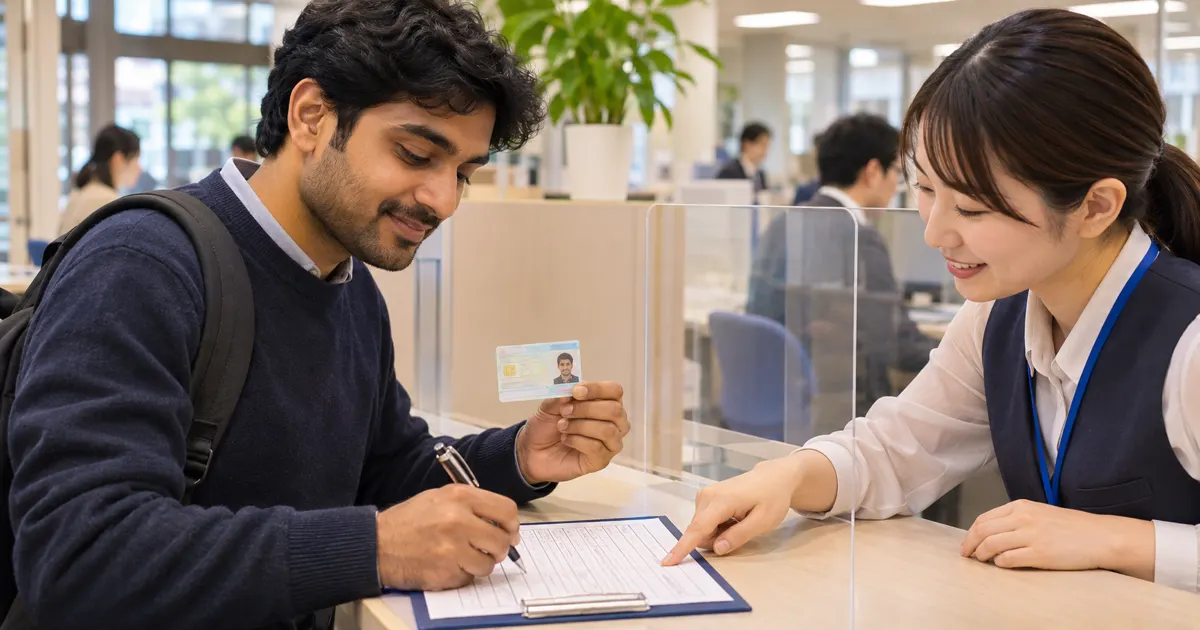
Your first job month in Japan begins with the address on your residence card, not with a telephone contract or a bank visit. A worker arriving with a medium or long-term status normally receives a residence card at a major airport. Within 14 days of settling at an address, report that address to the municipal office. The Immigration Services Agency says this notification is required for a medium to long-term resident and the address is entered on the card. Do it before arranging services that may ask for proof of address.
Week one: protect the documents that prove your status
Keep your passport, residence card, employment offer, work contract and the envelope containing your new address together. Check the exact status of residence printed on the card. Your permitted work is tied to that status. A part-time job outside it, freelance work, or a second job may need permission from immigration. Do not assume that a job title in English is enough. Ask your employer's HR team to explain your duties and whether it has completed the required employment notification.
Go to the city, ward or town office once you have a fixed address. Take the residence card and passport. The official residence notification guidance is the starting point, but the local office decides its appointment and document process. Ask there for a certificate of residence, called a juminhyo, if your bank or landlord needs one. Keep receipts and paper notices. Japanese offices still send important letters by post.
Health insurance and pension are early tasks, not optional extras
Your employer may enroll you in Employees' Health Insurance and Employees' Pension Insurance. If it does not, tell the municipal office that you need to understand National Health Insurance and National Pension registration. The Japan Pension Service's international pages explain the pension system and support material in several languages. Ask HR for the name of the insurer, your insurance card or digital access method, and the date deductions will start. Do not ignore letters because they are in Japanese. Take them to the municipality, your employer, or a multilingual support counter before a payment deadline passes.
Opening a bank account and getting paid
Many employers pay only into a Japanese account. Bring your residence card, address record, phone number, employee identification if you have it, and your personal seal if the bank asks for one. Each bank makes its own decision. New arrivals can face extra checks, so ask HR which nearby bank commonly handles staff accounts and whether it can provide a Japanese-language employment confirmation. Never let an acquaintance use your account for their money. Banks may freeze accounts where the activity looks like lending or resale.
Choose a SIM or eSIM only after checking your handset works on Japanese networks and the provider accepts your documents. A prepaid data plan can bridge the first days. For a contract, providers can ask for a residence card, bank or card payment details and a Japanese address. Read the cancellation date and roaming charges before signing. Your Japanese mobile number is useful for landlords, delivery firms and banks.
Housing: understand the first bill before you sign
Company housing can be the fastest route, but ask for the rules in writing. Check the rent, utilities, internet, furniture, move-out cleaning, notice period, key money, deposit and any deduction from salary. If a recruiter says housing is free, ask whether the employer can later move you or deduct a stated amount. For a private rental, the contract may be in Japanese, so use a local international association or a qualified interpreter before committing. Photograph the room, meter readings and damage on move-in day.
Work records, tax and getting help
Record your hours, breaks, shift changes and every payslip from the first pay day. The National Tax Agency's individual income-tax guidance explains that income tax is withheld from salary and that filing duties can differ by situation. Your employer may handle year-end adjustment, but it cannot answer every tax question, especially if you have more than one income source. Ask what each deduction on the payslip means.
If the job is not as promised, start with written questions to HR and keep copies. Hello Work is the public employment service, and the ministry page points to its offices. The immigration agency's support portal lists multilingual living information. These are safer first stops than a social-media group that asks for your passport scan or money.
Questions people ask
When must I register my address in Japan?
A medium or long-term resident reports a new address to the municipal office within 14 days of settling there.
Can I open a Japanese bank account immediately?
It depends on the bank. Take your residence card, address details, phone number and employer proof if available.
Does an employer arrange health insurance?
Many employers enroll eligible staff, but confirm the insurer and deductions. If it does not apply, ask the municipality about National Health Insurance.
Can I take a second job in Japan?
Only if your residence status permits it or you have the necessary immigration permission. Check before starting.
What should I keep from my first pay day?
Keep the contract, timesheets and every payslip. They help you check hours, tax and insurance deductions.
Official sources: Immigration Services Agency: notification of place of residence, Japan Pension Service: international information, National Tax Agency: income tax for individuals, Immigration Services Agency: foreign resident support portal, Ministry of Health, Labour and Welfare: Hello Work, Immigration Services Agency: status of residence information