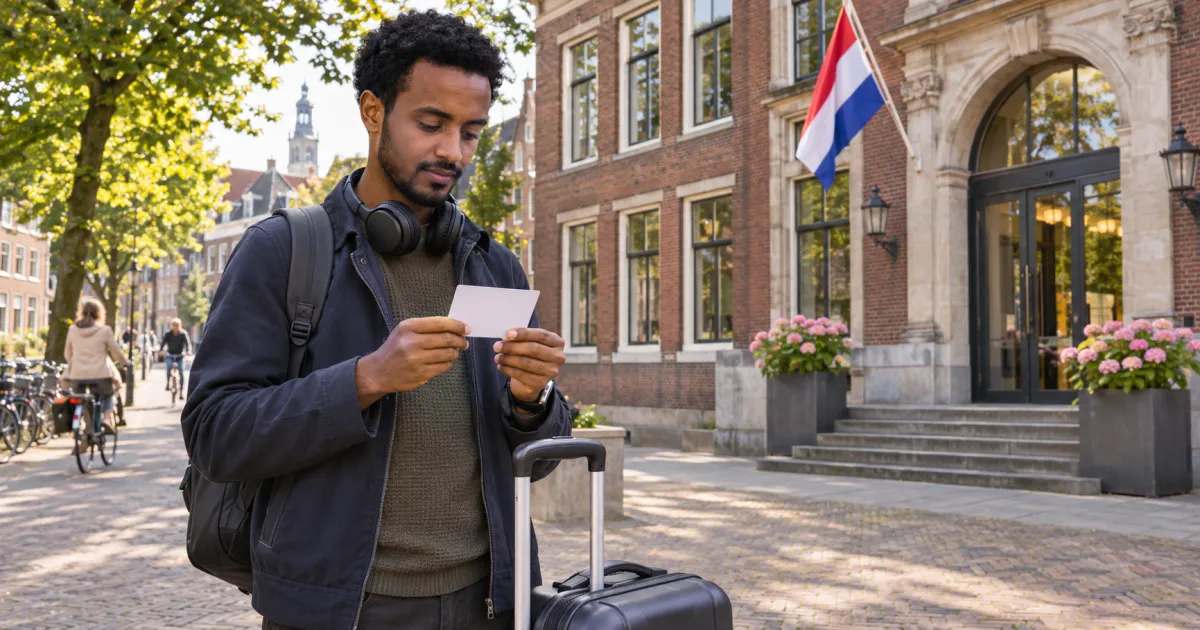
Your first month in the Netherlands runs on one number: the BSN, or citizen service number. You get it by registering at the town hall of the place where you live, and you need it to be paid correctly, open a bank account and buy health insurance. If you will stay more than four months, you must register within five days of arrival. Plan the rest of the month around that appointment.
Before you travel
- Bring your passport and the residence document or entry visa your employer arranged.
- Bring your tenancy agreement or a letter from the person you will live with. The municipality usually asks for proof of address.
- Some municipalities ask for birth or marriage certificates when you register a family. Ask your future municipality which documents they want and whether they must be legalised or translated.
- Carry enough money or a working foreign card for the first weeks, because a Dutch bank account takes time.
Days 1 to 5: register and get your BSN
Book an appointment with your municipality, which most towns let you do online. The municipality tells you which documents to bring. Keep the confirmation email, because an employer or landlord may ask to see it. These steps are on the Work in NL registration page, run by the Dutch government for people who come to work.
When you register you are entered in the Personal Records Database, the BRP, and the BSN is given to you automatically. If you will stay less than four months, or you work here but live in another country, you can instead register at one of the 19 RNI desks and still get a BSN. Government services, doctors and insurers all use the number, as the government BSN page explains.
Week 1 to 2: tell your employer and open a bank account
Give your BSN to your employer as soon as you have it, so your wage tax is calculated correctly on the first payslip. You also need a BSN to open a bank account, start work and buy health insurance. Dutch employers pay wages into a bank account, and rent and bills are usually paid by bank transfer or direct debit, so open one early. Banks set their own document rules, so check them before you visit.
For a phone, a prepaid SIM is the quickest start while you wait for your bank account. Monthly contracts are set by each provider, so ask which documents they want.
Week 2: apply for DigiD
DigiD is your login for the tax office, benefits and many health services. Once you have a BSN and an address, apply online. The activation code comes by post to the address in the BRP, normally within three to five working days, according to DigiD. If your registered address is wrong, the letter will not reach you, so check it at the town hall.
Within four months: health insurance and a GP
Dutch health insurance is compulsory if you live or work here, even if you have a policy from home. You must take it out within four months, with cover from your arrival date, and you pay those earlier months too, says the government guidance. Do it in your first month, not your fourth.
Then register with a GP near your home. The GP is the first doctor you see for any illness. For an emergency call 112. The Work in NL care page explains the out of hours service for evenings and weekends.
Housing: the hardest part
Finding a home is difficult in the big cities. Your contract should state the rent, deposit and notice period, and your landlord cannot raise rent or evict you without a good reason. If there is a dispute, the Huurcommissie, the rent tribunal, or Het Juridisch Loket, a free legal help service, can advise you.
Social housing has a rent of no more than around €933 a month in 2026, but it is for lower incomes and waiting lists are long. The Work in NL housing page says private sector rents are not capped in the same way and are often higher. Never pay a deposit for a place you have not seen, and check that you will be allowed to register at the address, because without registration there is no BSN.
End of month one: set up your budget
By the end of the month you will know your fixed costs: rent, health insurance, energy, water, internet and phone. Work in NL suggests listing every fixed payment and its date, then subtracting them from your pay to see what is left for food and travel, as set out on its finances page. Liability insurance and home contents insurance are voluntary, but Work in NL notes they can be very useful.
Questions people ask
How soon must I register with the municipality in the Netherlands?
Within five days of arrival if you will stay more than four months. You get your BSN when you register.
Can I open a Dutch bank account without a BSN?
Usually not. A BSN is needed to open a bank account, start work and take out health insurance.
What if I am staying less than four months?
You can register at one of the 19 RNI desks instead of the municipality and still receive a BSN.
How long does DigiD take?
After you apply, the activation letter arrives at your registered address, normally within three to five working days.
Do I need Dutch health insurance in my first month?
You have up to four months, but cover is backdated to your arrival, so it is cheaper and safer to arrange it straight away.
Official sources: Work in NL: New in the Netherlands, registering, Work in NL: BSN, Government.nl: Citizen service number (BSN), DigiD: Apply for DigiD, Work in NL: Housing, Government.nl: When do I need to take out health insurance if I come to live or work in the Netherlands?, Work in NL: Care, Work in NL: Finances, Work in NL: Insurance