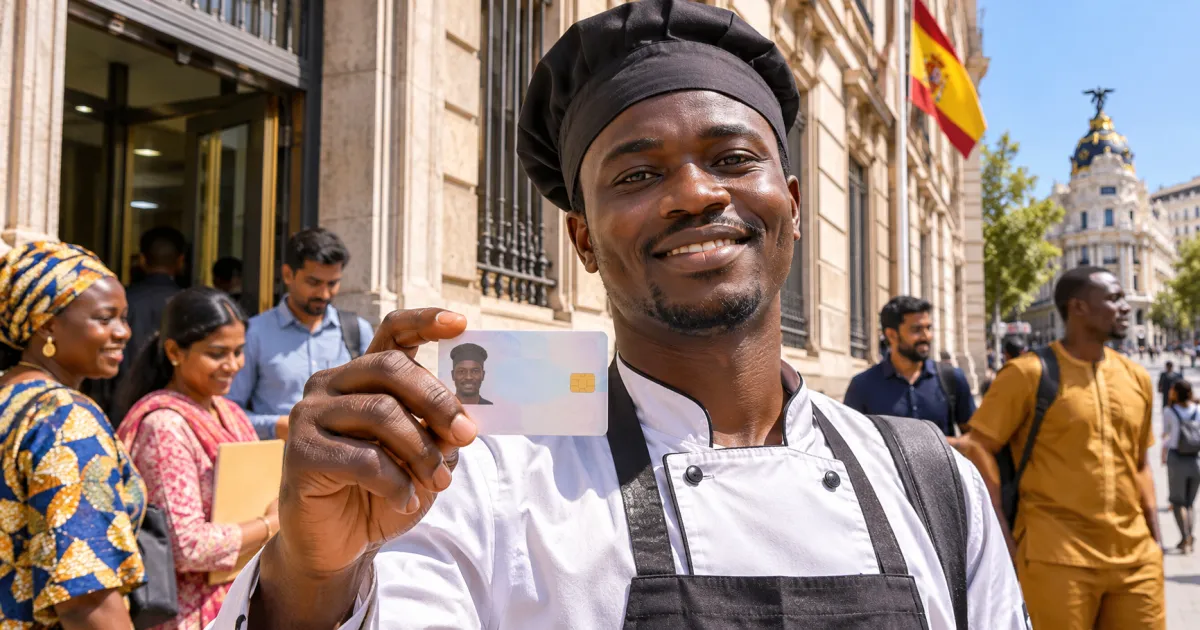
If you work legally in Spain and your employer registers you with Social Security, you are covered by the public health system, the Sistema Nacional de Salud (SNS). Doctor visits, hospital care and emergency treatment are free at the point of use. You pay only part of the price of prescription medicines. To use the system, you need your right to care recognised and a health card (tarjeta sanitaria individual) from your region.
Who has the right to public healthcare
The Law on the Cohesion and Quality of the National Health System (Law 16/2003) gives the right to health protection to Spanish nationals and to foreigners who have their residence in Spain. For care paid from public funds, a foreigner must be legally and habitually resident and must not be obliged to have cover through another route. People who do not meet these conditions can still get public care by paying for it or by signing a special agreement (convenio especial).
In practice, most foreign workers qualify as insured persons (asegurados). The Social Security magazine explains that employees and self-employed workers who are registered and active are insured, as are pensioners and people receiving unemployment benefit.
Who pays for it
You do not pay a separate health insurance premium. Public healthcare is funded through the state budget, and your employer's Social Security registration is what links you to it. Your payslip shows Social Security contributions, including 4.70% for common contingencies, but there is no extra charge each time you see a doctor.
The main cost you will notice is for medicines bought at a pharmacy with a prescription. The Medicines Act (Royal Legislative Decree 1/2015, Article 102) sets the share of the price that working people pay, based on the taxable income in their last tax return:
- Income below €18,000: 40%
- €18,000 to €60,000: 45%
- €60,000 to €100,000: 50%
- €100,000 or more: 60%
The same law sets 40% for foreigners who are not registered or authorised as residents. Medicines given in hospital are not charged in this way.
Family members
Your family can be covered as your beneficiaries (beneficiarios). According to the Social Security explanation, these include:
- your spouse or registered partner
- a former spouse who receives a maintenance payment from you
- children and similar dependants who live at your expense and are under 26, or older with a recognised disability of 65% or more
Each beneficiary also needs their own health card.
How to register: step by step
Healthcare is run by the 17 autonomous communities, but the right to care is recognised by the National Social Security Institute (INSS). The steps are:
- Get registered with Social Security. Your employer does this when you start work. Ask for proof.
- Register on the padrón. Most regional health services ask for a certificate of registration at your town hall to assign you a local health centre.
- Check and download proof of your right to care. You can do this on the Social Security electronic office with Cl@ve or a digital certificate, or without a certificate by entering your personal details.
- Apply for your card at your health centre (centro de salud). Bring the INSS document, your passport or TIE, your NIE and the padrón certificate.
- Choose a family doctor (médico de cabecera). The health centre assigns you one, and you book future appointments through your region's app or phone line.
Your health card
The Ministry of Health describes the tarjeta sanitaria individual (TSI) as the official document that identifies you when you use the SNS. It is issued by the regional health service where you live, and it is valid across the whole national system. Pharmacies use it to dispense your electronic prescriptions. Each card carries a personal code that links your records between regions.
The TSI does not cover care in other countries. Before travelling within the EU, ask for a European Health Insurance Card from Social Security.
Before your card arrives
Emergency departments treat patients even if they have no card yet. For non-urgent care in your first weeks, keep the INSS document with you, because some health centres can see you with it. If you arrive before your employment starts, consider short-term private insurance until you are registered.
Private health insurance
Many employers in Spain offer private health insurance as a benefit. It can mean shorter waits for specialists, but it does not replace your public rights. Keep your TSI active even if you use private care most of the time.
Questions people ask
Is healthcare free for foreign workers in Spain?
Yes, if you live legally in Spain and are registered with Social Security. Doctor and hospital care are free, and you pay a share of prescription medicine prices.
How much do workers pay for prescriptions in Spain?
Between 40% and 60% of the price, depending on income. People with taxable income below €18,000 pay 40%.
How do I get a health card in Spain?
Download proof of your right to care from the Social Security electronic office, then apply at your local health centre with your ID and padrón certificate.
Can my spouse and children use Spanish public healthcare?
Yes. A spouse or partner and dependent children under 26 can be covered as beneficiaries of an insured worker.
Does my Spanish health card work abroad?
No. For travel in the EU you need a European Health Insurance Card, which you request from Social Security.
Official sources: BOE: Law 16/2003 on the cohesion and quality of the National Health System, BOE: Royal Legislative Decree 1/2015, Medicines Act, Ministerio de Sanidad: Tarjeta Sanitaria Individual, Revista Seguridad Social: La Seguridad Social y el derecho a la asistencia sanitaria, Seguridad Social: Bases y tipos de cotización 2026